
Crafting the Tactile Interface of Architecture.
Handcrafted in South India, our slow-stitched, double-sided reversible Kasuti linens are meticulously tailored for boutique hospitality and refined residencies. Every stitch is counted by hand, leaving no knots.
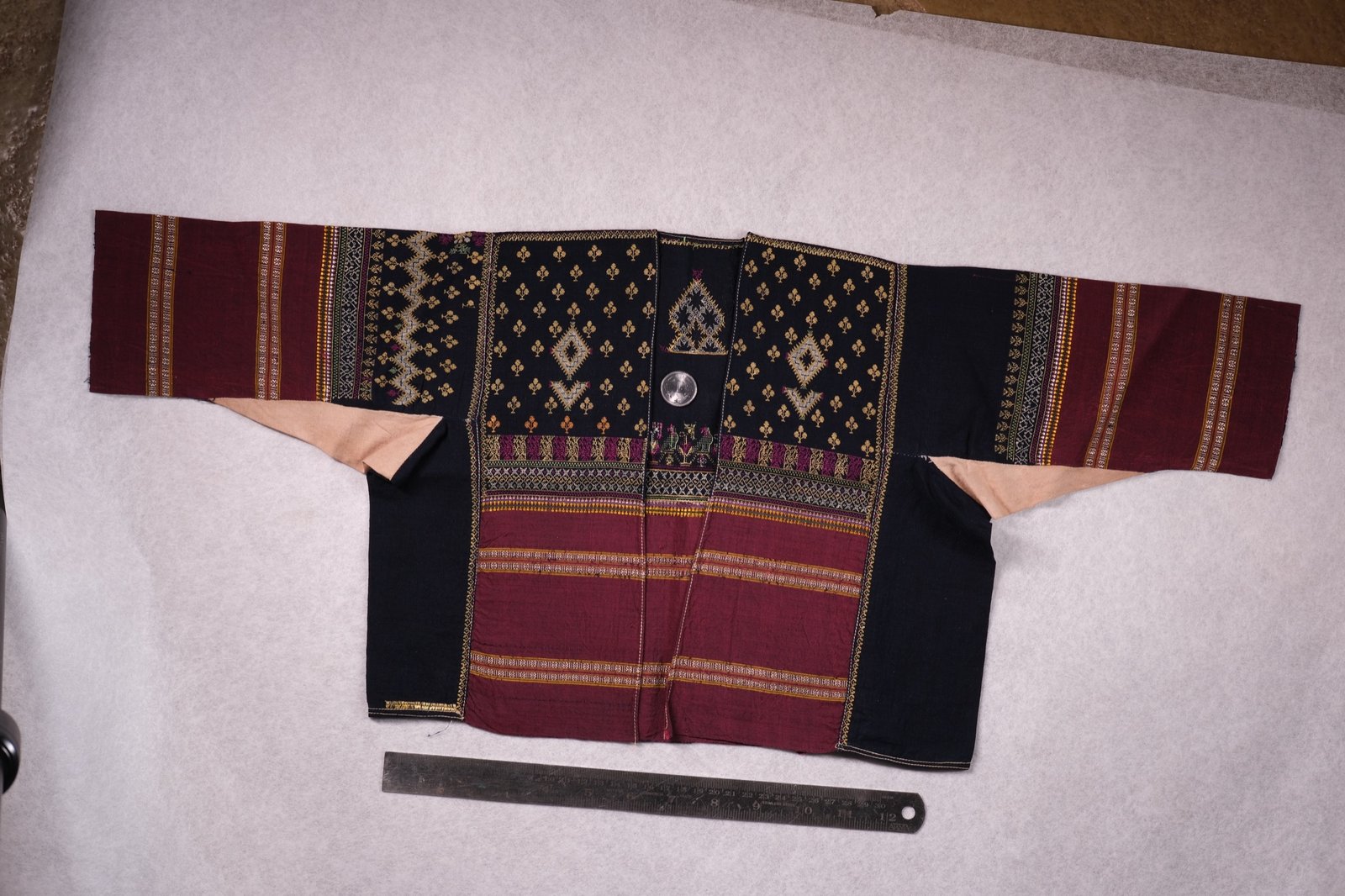
Suddenly, this wasn't just a beautiful craft. It was part of my own lineage, dormant and waiting to be awakened.— Kiran Kittur, Founder
Two Empires, Two Women, One Thread
The story goes that it began with the Chalukyas in Badami. The embroidery was born alongside the stone in the birthplace of Indian temple architecture. And that centuries later at Hampi, under Vijayanagara, it flourished in a city of half a million, bazaars trading with Persia and Portugal, pillars carved so finely they were said to sing.
We tell that story because it is ours to tell. Its motifs are the temples' motifs: the gopura, the lamp, the chariot, the peacock, all counted thread by thread, worked without knots, so the reverse is as honest as the face. But you will not find the embroidery in the charters. It was never carved into a wall or entered into a record. It lived in women's hands, at home, unsigned. One empire is where it was born. The other is where it grew. And in between, and long after, were the women nobody wrote down.
Five generations ago, one of them was my great-great-grandmother.
She embroidered without patterns, without permission, and as my mother says, without much sense. She lived ahead of her own time, and now years later a granddaughter is taking it forward.
ARCISI is the second empire of a domestic craft: the thing born at home, finally allowed to grow. Same lineage. Same discipline of the reverse side, no knots, nothing hidden, both faces finished. What was unsigned now carries a name.
Hampi through Time
An ode to the passage of time across the arid, basalt-laden ancient city. The collection mirrors the shifting hues of Dusk and Dawn: the cream and brown of ruins; the red, green, and yellow of temple deities; the deep botanical blue of nature; and the metallic glow of stars.
All motifs are historically sourced directly from Hampi friezes, frozen in time and reinterpreted as minimal lines for contemporary architectural interiors.
Download CatalogSingle Thread
Each tablecloth takes up to 4 weeks of continuous counted thread-work; complex custom tapestries can require up to a year of focus.
No Knot
Traced with mathematical accuracy, the reverse side of our textiles is identical to the front, revealing no raw knots or threads.
Artisan Network
We provide sustainable livelihoods. Every artisan is hired and meticulously trained for 12 to 18 months in Bangalore-approved methods.
Recent Commissions
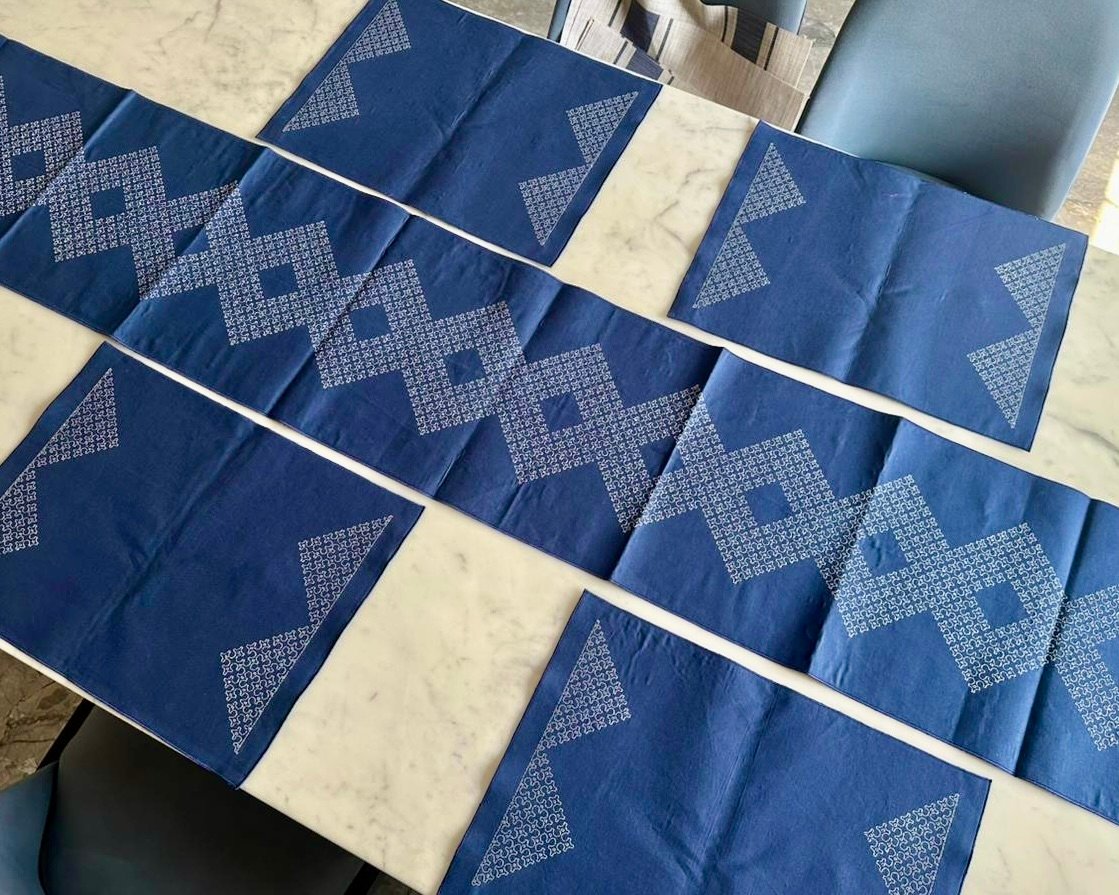
Private Residence
Stepped temple geometry in silver zari embroidery set on a textured deep blue hemp-cotton base.
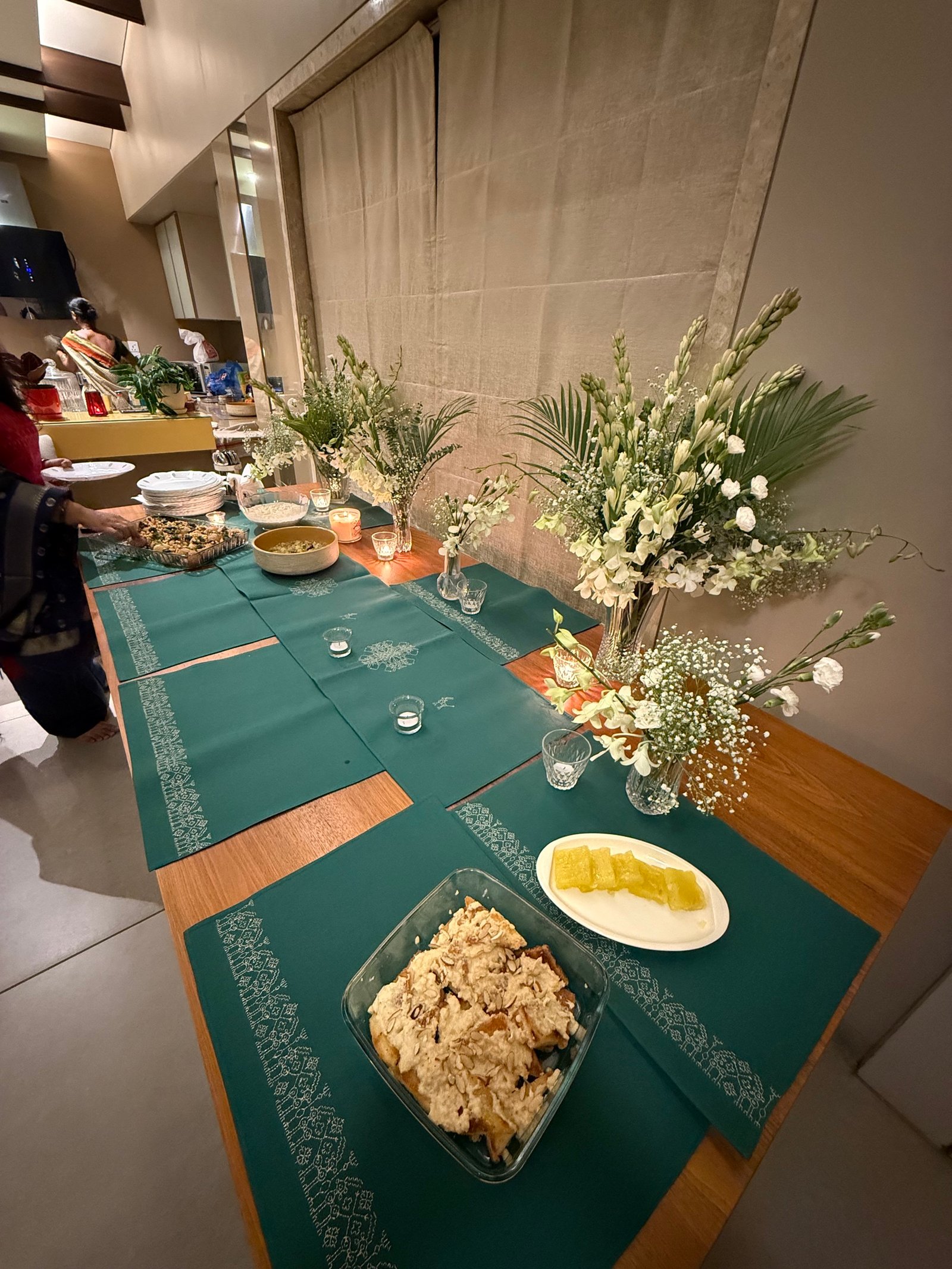
Private Villa
Gold zari deer motifs inspired by wild nature, on a botanical green double-layered dining table setting.
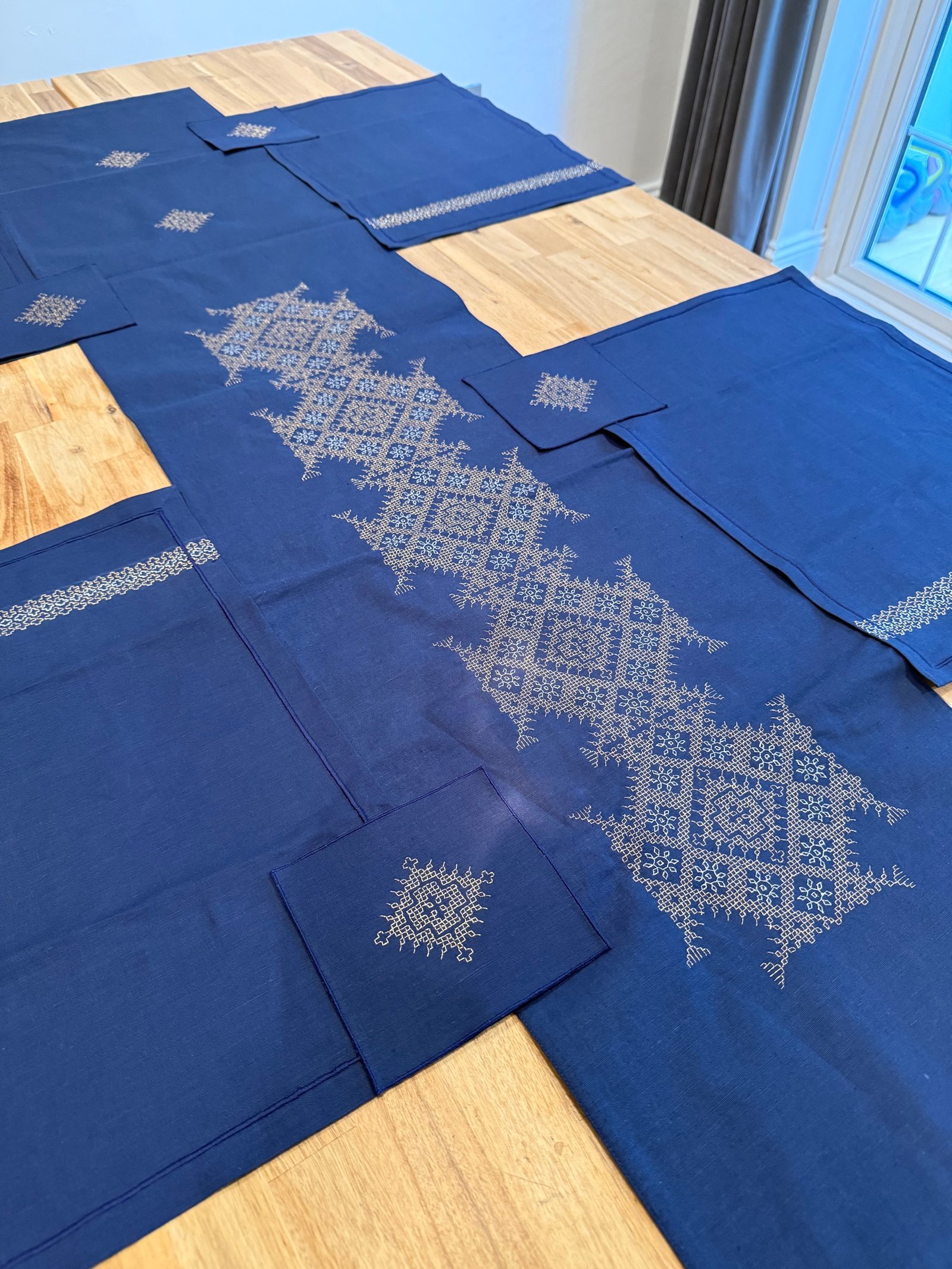
Private Cottage
Medallion repeat patterns echoing aged bronze door knobs on a lightly sheen cream linen base.
Latest from the Chronicle
Essays on architectural heritage preservation, material studies, and slow commerce from our South India studio.
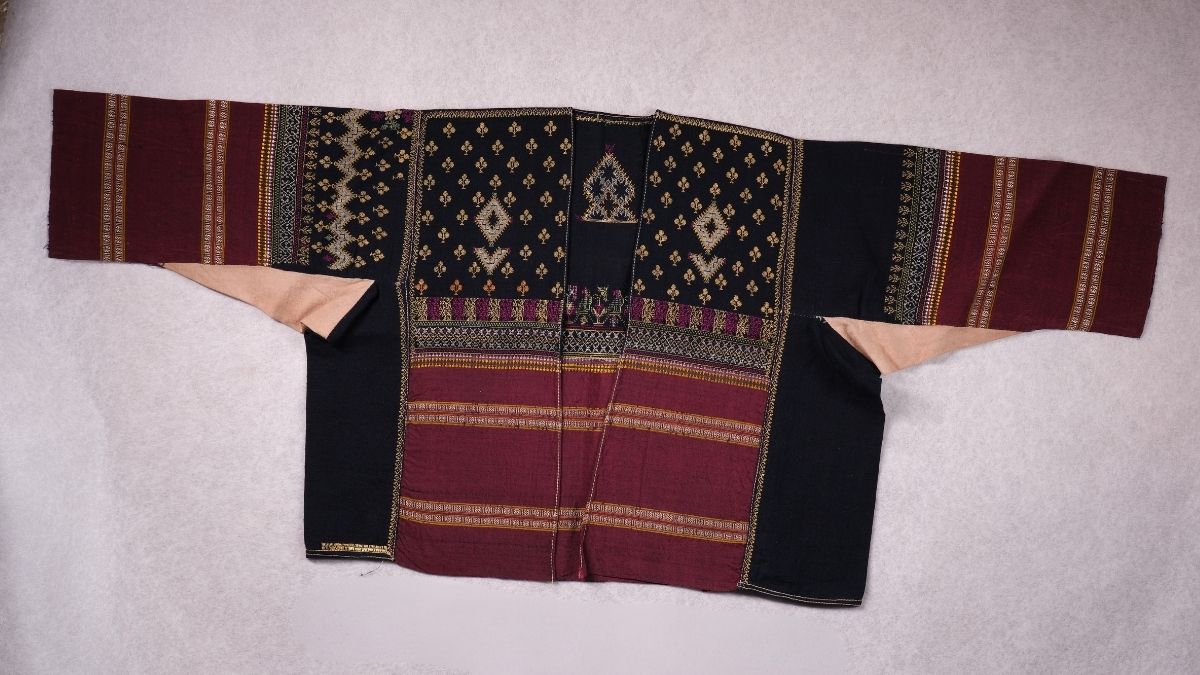
Who Owns A Craft?
A blouse in my family, a certificate in a government office, and a history with no sources. So then ...
Fabric is the Interface of Architecture.
We design from first principles: from the weight and drape of the base cloth to the mathematical geometry of the stitch, conceived in unison with the light, spatial parameters, and the client's story.